What Helps People Who are Stressed with Work


Much of my work outside of clinical practice is working with people in healthcare, human services, education, and public services. I have spent the last few years working consistently with teams that are overwhelmed and stressed. Yesterday, I had a conversation online with a team and I was giving them some tips on how to manage what they were dealing with. I received a very moving thank you note after our time together and I want to share some what they found helpful. I know many of you are struggling at your jobs and I hope you can take something from this blog.
While listening to the team, I heard about the impact of the pandemic intensified by staff shortages, feelings of anxiety and panic they have not experienced before, and distress that is amplified by ongoing uncertainties and witnessing of trauma and emotional breakdowns in people they are serving, people at home, as well as staff around them. All while having confrontations at work from the public they are serving about masks, vaccines, and political issues.

What helps in the face of this?

Providing support to your teams is particularly difficult because you may not have mental health expertise to provide effective support.  Please bring in an experienced mental health professional to provide strategic guidance. You need to build confidence and credibility in addressing what your teams are experiencing. I have been doing this kind of work with organizations for a long time. First be sure you have safety because when people open up, they are often discussing deeply uncomfortable feelings and you do need to know how to stay with them in that. 

Here are 10 tips that are helpful: 

1- Listen. When you listen to someone, I want you to give them your full attention, eyes, ears, and heart. Listening is a way of holding emotions. It helps us carry the load.

2- Validate. Think about you heard. Feel what you heard. Let yourself connect to the person you are listening to.

3- Do not dump more responsibilities on the people showing up for work. If you are short staffed, cut back on what you offer. Do not expect people to do more. They are often working at capacity.

4- Change what you do from the top rather than asking people to do more on the frontline.

5- All hands-on deck. Have people work in teams rather than isolation. Rethink how that can creatively happen in your workplace.

6- DEBRIEF daily.  An effective strategy is to have people in 2 person partnerships for debriefing. One person talks for 10 minutes about their day at work, it is safe to say anything, the other person listens, and then switch. The listener does not comment, they listen- quietly. Then they get a turn to unload.   Do not leave people to carry all this without a way to debrief. 

7- Many people are experiencing high levels of anxiety.  This is a normal response to what they are experiencing.  Provide calming support, stability and structure, rather than chaos and unrealistic expectations for your teams. 

8- Encourage people to have quiet breaks while working. Time to decompress.  Offer trainings on anxiety, depression, and effective self-care.

9- No one can respond to everything that is coming at them. Co-create expectations and check that the expectations are reasonable. Is this realistic? Stretching yourself to the point of breaking or injury means the expectations are unreasonable.

10- Give yourself a break. You can use your boundaries to support yourself and those around you. 

Please know that listening first is most important. Before you offer programs or trainings, listen. Offer trainings but do not overwhelm your staff with information. Pace matters.

Building a culture of self-care, emotional wellbeing, and caring community takes time, intention, and strategic vision.  There is lots of room to be creative while doing this.


Recognizing Emotional Abuse: Gaslighting


Have you ever been told these things: 

You are too sensitive.
You are crazy.
That never happened.
This was your fault.

If you try to talk about how any of this makes you feel, you are told, “You are being dramatic.”
In other words, you are blamed for being upset or bothered by anything. 

Gaslighting is something people often learn in childhood to protect themselves from blame. Taking responsibility for ourselves is essential to making any relationship work. When people use gaslighting, communication fails. You are not heard. You are blamed.

Gaslighting is isolating. You often end up alone in your relationship.

Gaslighting is a form of emotional abuse. It is not a single experience. Gaslighting is a strategy that someone relies on and uses over and over. It is a pattern. Lying is big indicator of gaslighting. There is constant lying about big things and about really small insignificant things. The lies make it impossible to believe anything you are told. Marriage is a relationship of trust. Trust is the whole contract. So when there is a pattern of continuous lying it is a big red flag and a set up for relationship failure.

You may wonder what the purpose of all the lying is - it keeps you off balance. You never really know what the gaslighter is up to. Everything is concealed from you.

Blame: Gaslighters do not take responsibility for their behavior. Everything is twisted to somehow be someone’s fault. And laying blame on someone is very important to gaslighters. They go to great length to explain how things going wrong is someone else’s fault. In a marriage, you may find yourself blamed for things that you had no part in. 

Gaslighters are really afraid of being blamed. They can’t tolerate mistakes. If there is a way to blame someone they seize it and use it as an excuse to attack and rage. Gaslighters are big rage-aholics.

Sensitive: It does no good to talk about your feelings with a gaslighter. They don’t have empathy for your feelings. In fact, they make fun of your softness and emotions and call you “crazy” for having feelings. When you discuss how you are feeling, you are cut off with, “You are being too sensitive.” “You don’t know how to take a joke.” Gaslighters think humiliating you is funny and if you are bothered by being humiliated and put down, you are “overreacting”.

You remember things wrong. Because lying and blaming are used so frequently, another common experience is being told you remember things wrong. Gaslighters would rather fight with you than follow through with agreements and promises they made. Gaslighters do not keep their promises. 

If you were in a relationship with someone who used these strategies, there is often emotional trauma to heal from the wounds of being lied to, blamed, told you were crazy and too sensitive. 

It also may leave you afraid to enter another relationship for fear of being emotionally abused again.

Once you understand the tactics of gaslighting, you will be less likely to settle into a relationship with someone holding up these red flags.

If you are interested in learning more about this, I highly recommend reading Gaslighting: Recognize Manipulative and Emotionally Abusive People by Stephanie Moulton Sarkis.


Boundaries, Blankets, and Totem Poles


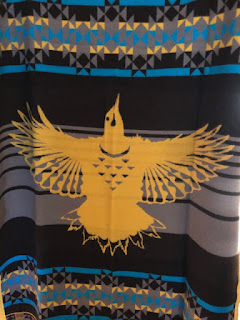
Blanket Designed with Kateri Masten and Chisa Oros


"Do your own work."     "Don't ask Black, Indigenous, and People of Color to do it for you."

I wasn’t sure what I needed to do. Until one day I woke up and to my horror, saw white racism everywhere in my home. Before my day of horror, I had been reading books on antiracism and white body thinking. I joined a book club with three friends to talk about racism and figure out what we could do. 

Do? I didn’t really feel competent to do anything specific. 

I felt the words of the authors penetrate my white skin. From author Resmaa Menakem, I learned to look closely at culture, the culture of people and the culture of “things” and to listen with my body around other bodies. 

From author Ibram X. Kendi I learned to ask questions about racism without fear.

Then one morning, I woke up and had a conversation with the grey wool blanket on my bed. 

         Me: “Where did you come from?”

         Blanket: “I was a wedding gift. You know that.”

         Me: “You have a circle of tipi’s on you. Who made your artwork?”

         Blanket: “Read my tag, it is a white owned business. 
                        I think the artist was a white woman.”

And so began my search through my house. Blankets, towels, a bowl, pillows, all had stolen Indigenous artwork. All were made and produced by companies that were owned by white people.

I was horrified. A piercing painful scream shook me about all this stolen artwork.

I went for a walk to clear my head. I got down to the beach and in my small town, I stood by the water looking up at two totem poles. 

         I asked the totem poles, “Where are you from?”

        The totem poles told a long story and ended by saying they were made by a white artist. 

Another wave of horror washed over me, how many times had I seen these totem poles and not wondered about their story. 

I returned home and wrote to my city council about the totem poles on city grounds. I told them what the blankets and totem poles told me.  I don’t know what would come of it, but I've been invited to a meeting to discuss it.

We have to respect boundaries. We must stop colonizing, stealing and taking what doesn’t belong to us. It’s ok to admire the artwork and to buy that artwork from Indigenous artists. But it is not ok to "take" that artwork or “colonize” the artwork.

I see the colonizing mindset everywhere. Not only in art. We must be more attentive to boundaries to heal from the colonizing mindset. 

I’m cleaning up my house. Replacing “stolen and colonized” art. The blanket you see in the photo is my new blanket. It’s from EighthGeneration in Seattle, a Seattle based art and lifestyle brand owned by the Snoqualmie Tribe. Their tag line is "Inspired Natives, not Native-Inspired".

The story about the totem poles and the city council continues.  I will keep you posted. 

I am not sure where all this leading, but here are some things you can take away from this:
- Reading about racism, whiteness, and antiracism helps me see things I could not see. 
-Being in a small group with others to talk about what I am learning and reading helps me develop my “voice” and break the silence about the racism that is everywhere.
-You will find what you need to speak up about when you are ready to do something.  There is no band wagon to jump on.

 There is so much to do to make our world safe for Black, Indigenous, and People of Color. If you listen, you will hear the things that are calling you to stand up and speak about. 

Be patient. I didn’t know that mine would be totem poles. You will know, you will feel it shake you, perhaps with horror at first. Feel free to tell me what calls out to you.


Boundaries for Extreme Challenges


I am writing to you from Washington State, where I live and work. When I teach workshops on boundaries, I talk about boundaries for ordinary experiences and boundaries for extreme challenges.

You use your boundaries to help take care of yourself and others. 


COVID-19 is an extreme challenge.

Here is the framework for navigating Extreme Boundary Challenges:

1)  As the challenge gets bigger or harder, your self-care must increase. If you have not been great at doing self-care, an extreme challenge will drain you physically and emotionally very quickly. So you must refuel with self-care practices often. It is essential.
     
2)  Make your self-care schedule first, not last.

3)  Define your responsibilities. During extreme challenges, new responsibilities get added to your life. Who and what are you taking care of?  Make a list. (Family, friends, clients, patients, staff) Your responsibilities will grow. During an extreme challenge it is okay to stop taking care of certain responsibilities and prioritize. You can’t do it all! If you add in more, you must take some things out.  Take time to reorganize. Decide what responsibilities are a yes and what is a no for now.

4)  Be a spider and create a web of resources to help you during this time. While many places are temporarily closed, there are many people making resources available online. It might be very scary to find yourself needing help. During extreme challenges, everyone needs help and you may need to use new resources. These resources may not be working well or available yet. This is normal during an extreme challenge. Ask others for help using new resources. Be kind to people who are helping. They too may be stressed, overloaded, and overworked.

5)  For the COVID-19, stay connected to others. You may be doing this by phone or online, but join in with others. You can isolate and not be lonely. Phone or online talking is better than text. Text is missing a dimension that helps people feel each other. A voice or online talk is much better for communication. You may also be experiencing too much communication, and need a break from your phone. Quiet is important.

6)  Finances. During any extreme boundary challenge, I ask people to pay attention to their finances. It can be scary to look at your real numbers. But please do not turn away from your finances. It helps to make a budget and figure out what you need to get by right now. It helps to keep your eye on your financial responsibilities. There may be things you can’t afford to donate to or help with. You may be in a position where you can help others financially and share your resources. But either way, it’s important to do a reality check and know what you can and can’t afford right now. 

7)  If you live with a partner, discuss all responsibilities you are both facing and make a plan together. Do you have elder family members that are dependent on you? Children at home? Discuss all priorities together. Try to make a plan together about what is important and how responsibilities can be shared. It is easy for partners to get angry and feel like their partner is addressing things that don’t matter. It is easy for a partner to feel like they are not being heard. Stop and talk about what matters. Don’t go to the store and buy hundreds of dollars in toilet paper without talking to each other about what your household needs really are.

8)  You are in charge of your wellbeing and safety. COVID-19 is a pressure cooker of decisions that leaders need to make. An overwhelmed exhausted leader may not be thinking clearly. Someone who has been highly stressed prior to COVID-19 may be drained and going without adequate rest. If you are working for someone that is making poor decisions, you may need to stand up and make safer healthier decisions for yourself. Please pay attention, look for reliable information, and stay safe. You need to establish a boundary if you are being put in danger. If you get overworked or exhausted, you need to rest. You have a personal capacity. You need to speak up and watch out for your team. YOU NEED TO TAKE BREAKS from the challenge. 

9) Though none of us have experienced COVID-19, all of you have experienced extreme challenges before. You have gone without rest. You have been at a loss when looking for a resource. And you did find your way through.  You have taken care of family. You have moved. You have cut back on expenses. You have reshuffled. You have accepted help. You have given help to others. You know many things from those past experiences. You have lots of skills and can count on them.

10) In summary, increase your self-care, define your responsibilities, define your finances, create a web of resources you need or can share with others, pay attention, and trust that you have some strong abilities from past challenges.

Where are all the small things?


In our ever shortening of our time spent on anything: texting rather than a call; abbreviations instead of words; starting an email by just stating your business, without a Hello. 
                                                 
The new boundaries minimize the time we spend on anything. Supposedly all the minimizing is to ensure we can use our time for what really matters.

And are you getting to what really matters?

I am grieving the absence of things like ‘Hello’, whole words, and attention to small things.

The small things are starting to add up. It’s a big pile of, “This no longer matters”. 

Somewhere buried in the discard pile is also the signal, “You no longer matter.”

I’m going to buck the trend, I’m bringing back attention to small things.

Attending to the small things has a large impact on relationships. Connecting and tuning into each other has more value to me than saving time.  

Making a Self-Care Wheel for 2020

Every year I make a short video to walk you through creating your self-care wheel and see what jumps out as your self-care priorities. Here is the 2020 5 minute video on how to make your self-care wheel.

I have heard from some of you that you are using this video in your staff teams. I love seeing the wheels you make and what feels like a priority for your self-care now. 


For 2020, I had some new things come forward as priorities.  I am planning to do more personal retreat time, being sure I have even more time for contemplation and reflection. I have some daily time for retreating with my guitar, reading, and writing, but this year I am saving full days weekly for personal retreat time.

Writing is a place on my wheel for 2020. I write haiku, which is playful and relates to nature. I also have several writing projects that I want to complete in 2020. The word "completing" kept coming up in the writing section of my self-care wheel. 

I suggest you make your wheel a few different times so you can see what happens as you focus in.

Here are the things that came up as priorities for my self-care wheel for 2020.

Though I've practiced mediation for a long time, this year my meditation is expanding in two ways. One is Mindful Self-Compassion and the other is being more mindful with my phone and social media. Less is more. Media mindfulness.

Family time feeds my heart. As my children have grown up, I understand the need to do their own lives and I am trying to find ways this year to spend quality fun and meaningful time together. 

Since I broke my hip in 2019, I am increasing my walking. I can't jog like I used to, but I would like to be able to take much longer walks. I am building up to a 5K as part of my walking self-care. There is a tipping point when I push my hip too hard, it hurts and I don't really gain anything. Exercise is a key place on my wheel. I'm a daily exerciser. I swim, lift weights,  pilates, walk. This year I am also hoping to get into yoga.

And the final place that showed up on my self-care wheel for 2020 is clearing and getting rid of things that I am not using. This also feels like a mindfulness practice. I can't tell you the number of times I have thought about and half-heartedly cleared drawers, closets, and stuff.  It has never shown up as part of my self-care. Seeing it as connected to my self-care is putting a whole different spin on it. It also feels connected to caring for our environment.  I am seeing it as changing my lifestyle to be more in tune with living in harmony with the planet. I feel like I am waking up.

The process of making a self-care wheel helps you clarify what is really true for you and what is relevant right now for your self-care. I have been sharing this process for several years and if you do it yearly, you will find that you are strengthening your inner core in layers. You can expand outward and see things building on each other. One year "meditation" was on my wheel. Just practicing meditation. And that has now expanded to an awareness practice that shows up in my writing, exercise, my social media, personal retreat time, and self-compassion. 

If you are doing this for the first time, please save one spot on your wheel for FOUNDATION. Your foundation is sleep, eat, exercise. When you get depleted in any way, always return to focus on your foundation. 

If you have been doing the wheel several years with me, your Foundation is probably embedded knowing. You know when to return to it. You can fill in 6 spaces on your wheel or save one for Foundation. 

Take good care of you in 2020. If you get time, send me an email and share what showed up on your self-care wheel.


Insiders , Outsiders, and Holidays


 As a very young child, I knew the feeling of being an outsider, inside of my family. I was not raised by my parents and their absenteeism in my childhood was felt. This resulted in me searching for connection and relationships in my neighborhood, at the homes of my childhood friends.

I learned at the houses of my friends, at their family dinners, at their birthdays, etc. what being an insider looked like. I joined in other people's families and felt included.  I grew up seeing my community as “home” and learning how to help myself feel included.

And though things turned out ok, I have a deep wound inside that can sometimes rip open or come up to the surface when I feel the sting of being an outsider, or being excluded.

As we go into the holiday season, notice your boundaries, who is considered an insider and who is an outsider in your family?

 If, like me, you are familiar with being the outsider, and the pain of that, take time this season to notice the moments when you feel like an insider and when you feel like an outsider. 

If you find yourself hurt or excluded, use these three steps to help yourself with the pain.

Step 1 - Notice how you are feeling. Acknowledge to yourself, I am feeling like an outsider. When I feel excluded, it hurts.
Step 2 - Assure yourself that this happens. It is a normal, human experience. We all feel like insiders and outsiders at different times.  
Step 3 - Say something kind to yourself. "I know this hurts. I'm sorry you were left out. I'm going to make some time right now to do something with you." Take a kindness break and give to yourself.

You can use these three steps to soothe yourself any time you are feeling hurt, about anything. It takes some practice. 

 Here is a short video giving you ways to soothe yourself with kindness when you are hurting.

The Three steps are from the work and research on Self-Compassion and Dr. Kristin Neff.

How to Stop Failing at Self-Care


Are you failing with self-care? Maybe you really are too busy. Maybe you are dragging yourself around sick, and emotionally circling the drain, and having low energy and no inspiration. Nothing is calling you.

First thing is to figure out if you are emotionally plugged up.
Have you had a loss, or trauma in the last 6 months? Are you facing some hard things emotionally? It is possible that your draggy feeling has some grief hidden in there.

Self-care recovery can be done in baby steps. Crawl back into bed. Take out a journal. Ask yourself about your grief or loss. What has been emotionally hard? Write about it. Make contact with your feelings. Read your journal, writing to yourself. You have to get emotionally truthful with yourself and understand how you are feeling.
  

When you struggle with self-care, it usually means you are struggling with some other things.


While you are in bed journaling, I want you to recover from whatever cold or body injury you have. Get more rest. Stop doing. Stop running around. Stop asking so much of yourself. Your body needs to recover. Rest is the most underrated medicine. Read a novel, find some interesting music to listen to.  Rest is great for so many things and is a wonderful self-care tool. Catch up on your sleep.

 Getting on track with self-care:


After you have rested, caught up on sleep, eaten well, you can take baby steps to start moving. This can be walking, going to a gentle yoga class. Sometimes joining an exercise class is helpful because they give you the structure. You don’t have to think about it.

Do things that make you happy and give you joy. This is a journal practice to help you: Make a list of 50 things you like to do. Write it as fast as you can. It’s ok to repeat yourself on your fast 50 list. Then read your 50 list and circle only the things that really are self-care just for you - (usually all kinds of to-do stuff pops up, but we are not looking for your to-do list). Only circle the self-care ideas. Anything surprising pop-up?
Do those circled things that are just for you.


I learned that creativity is an essential part of my self-care, playing music, writing/ journaling, and knitting. Reading is also an instant self-care feeder. There are so many choices to read, I keep my kindle loaded at all times and it is always with me.


Try new things: 


If you are not feeling self-care from your old activities, change it up. Learn something new. Try something outside the box. Just follow your curiosity and see where your heart leads. My heart led me to 2-stepping, SoulCollage, cross-country skiing, etc.

Self-care is a process of discovery. Let your self-care surprise you. I look forward to hearing about your discoveries. Send me an update on what works for you.

By practicing self-care, I have created a sanctuary, that I am always in. My sanctuary of self-care helps on the hard days.

Are You Dating Your Device?

"Research by the Nielsen Company found that the typical American adult spends, on average, ten hours and thirty-nine minutes per day interacting recreationally with screens." Doreen Dodgen-Magee, Deviced 


You probably don't need a psychologist to tell you this is having a huge effect on all of us. But in Doreen Dodgen-Magee's book Deviced, she helps us reflect on what this means for our relationships, our creativity, and our ability to feel resilient. She asks us to think about our relationship to our devices.

And yes, that's exactly what it is - a relationship.

I felt disturbed by this book. Disturbed in a very good way. She talks about our "embodied lives" and what is at stake for us as we spend more and more time in digital spaces. I am really struck by the word embodied, and that boundary, or lack of boundary between an embodied life and a digital one. I can't shake the idea out of my mind - how much we interrupt our embodied lives.

She raises concern about how our devices are affecting our ability to maintain eye contact. Imagine the ripple effect in every relationship and our ability to bond and feel cared for and connected with others.

An added value in this book is the significant research she has gathered for us. Every question I have ever wondered about regarding technology's impact on our psyche has been answered in this book. She includes a wide swath of research from the speed of images, video violence, porn, attention span, impact on children, overwhelm, digital overload, radiation, etc. 

Are you concerned about the radiation that leaches off your phone? I will never use my phone when it has one bar after reading the research she has gathered up in this book. 

Her exploration of how the immediacy of getting answers online is impacting resiliency is stunning. Having spent a lifetime of work on helping people develop their resiliency, I am learning how our digital spaces are undermining our embodied resiliency.  I feel compelled to share this book and get us all into a different and deeper conversation.

This book will make you ask yourself some questions. I am certain many will change their habits after reading this book. There is something very impactful about the way she has laid out what is  understood in research and the impact on our embodied selves.

This is a worthy and disturbing read.